
Deconstructing Your Mental Operating System
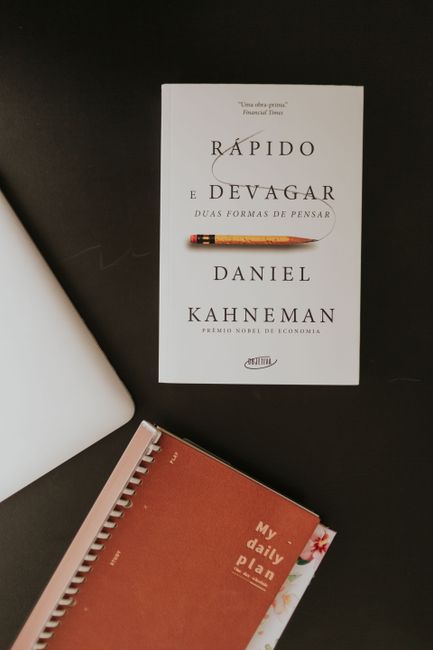
Imagine your brain isn’t a single, unified computer but a device running a dual-core processor. One core is built for speed and efficiency, handling thousands of tasks on autopilot. The other is a powerful, energy-hungry core reserved for heavy lifting. This is the essential model Daniel Kahneman presents in Thinking, Fast and Slow, which serves less as a traditional book and more as a user manual for the powerful, yet often glitchy, hardware inside your skull. Understanding this division between our intuitive, automatic mind and our deliberate, analytical mind is the first step toward debugging our own decision-making processes and avoiding predictable, costly errors.
The Default Setting: Automatic and Error-Prone
Most of our lives are run by what Kahneman calls System 1, our brain’s automatic mode. This is the system that lets you instantly know the answer to 2+2, read the mood of a room, or brake a car when a ball rolls into the street. It’s incredibly fast and requires almost no conscious effort. However, its efficiency comes at a cost. To achieve this speed, it relies on mental shortcuts and rules of thumb (heuristics). While these shortcuts work well most of the time, they are also the source of systematic biases—predictable bugs in our thinking that can lead to poor judgment, regardless of our intelligence. This system is designed to create a coherent story out of limited information, often jumping to conclusions that feel right but are factually wrong.
Common Cognitive Bugs and How to Spot Them
Kahneman’s work catalogs the common glitches that arise from our brain’s reliance on its automatic default settings. Recognizing them is the key to engaging our more thoughtful, manual override.
The First-Impression Fallacy
Our minds tend to latch onto the first piece of information offered, using it as an anchor for all subsequent judgments. In a salary negotiation, for example, the first number mentioned—whether high or low—has a disproportionate effect on the final agreement. All other offers are evaluated in relation to that initial anchor, rather than on objective merit. This is why a high initial asking price often leads to a higher final price.

Taking the next step becomes straightforward when you have the right support — Heal your past, design your future is worth exploring.
Taking the next step becomes straightforward when you have the right support — Become an Ultimate Master of your life is worth exploring.
The ‘Top-of-Mind’ Trap
We assess the likelihood of an event based on how easily we can recall examples of it. After seeing several news reports about local burglaries, you might feel your neighborhood is becoming much more dangerous, even if crime statistics show a downward trend. The vivid, easily accessible stories in your mind override the abstract data, creating a distorted perception of reality.
The Optimism Bug
This is our inherent tendency to underestimate the time, cost, and challenges of a future task while overestimating its benefits. It’s why a simple home renovation project planned for a weekend can stretch into months and cost double the budget. This isn’t just wishful thinking; it’s a cognitive flaw where we focus on our goal and neglect to consider the countless small obstacles and potential delays that are statistically likely to occur.

The Irrational Calculus of Risk and Reward
Perhaps the most groundbreaking part of Kahneman’s research is Prospect Theory, which explains how we truly weigh our options. It turns out we are not rational economists; our financial and personal decisions are governed by a powerful, emotional aversion to loss.
Why Losing Hurts More Than Winning Feels Good
The psychological sting of losing $100 is far more potent than the pleasure of gaining $100. Kahneman’s research suggests the pain of a loss is roughly twice as powerful as the joy of an equivalent gain. This ‘loss aversion’ explains why investors will hold onto a plummeting stock, hoping to avoid realizing a loss, rather than selling and reinvesting in a more promising asset. It also explains our preference for the status quo, as any change involves the risk of a potential loss.
The Power of a Frame
Our choices can be completely reversed simply by how the options are presented. An investment opportunity described as having an “80% chance of success” sounds far more appealing than one with a “20% chance of failure,” even though they are identical. This framing effect preys on our automatic system’s emotional response, bypassing the logical analysis that would recognize the equivalence.
Engaging Manual Override: A Guide to Mental Debugging
While we can’t get rid of our automatic programming, we can learn to install a ‘firewall’ against its worst impulses. The goal is not to think slowly all the time, but to recognize high-stakes situations where our gut feelings are untrustworthy and a more deliberate approach is needed.
One powerful technique is the ‘premortem.’ Before embarking on a major project, imagine it has failed completely a year from now. Then, spend ten minutes writing a detailed story of how that failure happened. This exercise forces you to look for potential threats and weaknesses that your natural optimism would otherwise obscure. By actively searching for what might go wrong, you can engage your analytical brain to create more robust, realistic plans and improve your odds of success.